Money
A quarter of MOT failures cost under £50
29 of the 83 failure items we price cost £50 or less to fix, and they are 26% of every failure recorded. The cheapest numbers in the dataset, and the deadline that makes them expensive.
The MOT is a safety inspection, so it fails safe to assume failure means money. The dataset says otherwise: 29 of our 83 priced failure items cost £50 or less, and between them they account for — of every failure item written down in 111,079,937 tests.
Not one of them is a judgement call. A stop lamp either lights or it does not; a washer either sprays the screen or it does not; a wiper either clears it or it does not. There is no professional discretion to appeal to, which is why these are the cheapest items in the data and also the least avoidable.
The ten cheapest failures, by recorded volume
Brackets are our parts-weighted estimate, not a garage quote. “Recorded in” is the share of all MOT tests that record the item; the same car can appear here twice, which is why the shares add to more than 100%.
| Failure item | Est. repair | Recorded in |
|---|---|---|
| Stop lamp not working | £3–£12 | 1.6% |
| Indicator incorrect colour | £3–£12 | 1.3% |
| Malfunction indicator lamp inoperative | £3–£12 | 1.2% |
| SRS warning lamp indicates a fault | £3–£12 | 0.4% |
| Stop lamp partly not working | £3–£12 | 0.4% |
| Mirrors slightly damaged | £3–£15 | 0.4% |
| Rear fog lamp not working | £3–£15 | 0.4% |
| ABS warning lamp on | £3–£15 | 0.3% |
| Washer provides insufficient liquid | £5–£15 | 1.2% |
| Washers not working | £5–£15 | 0.7% |
All 29 items under £50 are classified owner-fixable. The full price list has every item, with the recorded prices people reported paying.
Why “cheap” is the wrong word
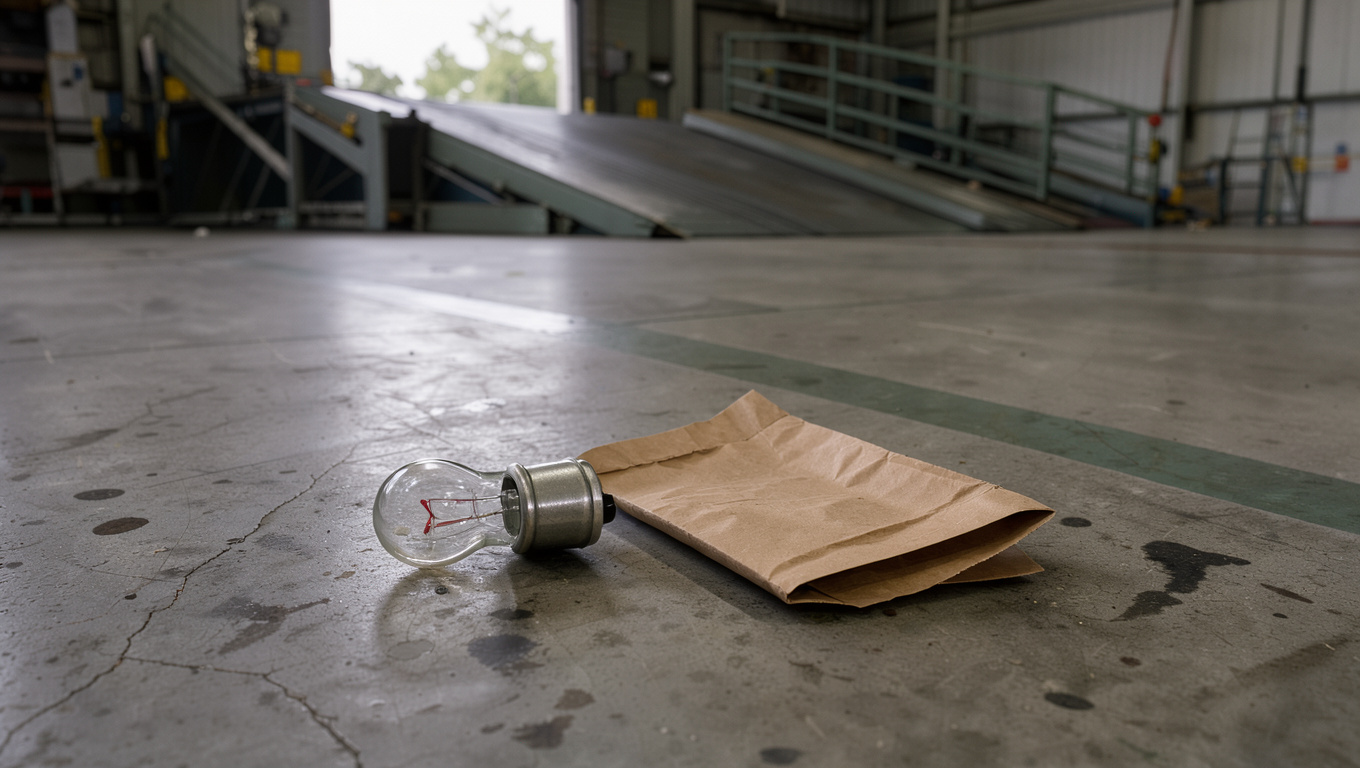
Stop lamp not working is recorded in 1.6% of all tests — more often than any suspension part, more often than worn tyres — and the bracket is £3–£12. Ten years of failing cars at 60p a bulb would still cost less than one corroded sub-frame. The bill is not the part. It is the second journey:
- A car that fails on listed items only — lamps, tyres, wheels, mirrors, registration plates, wipers — and is taken away and brought back before the end of the next working day gets a free retest. Take it home for a week and you pay a partial retest fee.
- Leave it at the station for the repair and it is retested free within 10 working days. That is the cheapest path only if the station's labour rate is not the reason you took it elsewhere.
- After those windows it is a full test at the full fee, up to £54.85 for a car. A £3 bulb found late can cost more than the repair.
That is the real shape of a cheap failure: one part, one trip, one deadline. The order to do things in is written out by deadline for exactly this reason.
The other end of the same table
It is worth seeing the two extremes together, because they are the same dataset. The 8 items we bracket at £150 or more are only — of recorded failures — and they are almost all one story: corrosion, and the labour of cutting it out. A quarter of failures are cheap and most of the rest are middling; the expensive quarter is rare and concentrated in structure, which is also the part a cheap car cannot economically survive.
The middle is where most people actually are: brakes, suspension, tyres, exhausts — £80 to £300 per item, often more than one on the same sheet. That is the case the calculator exists for: it totals the brackets on your own sheet so the decision is “fix or scrap”, not “how much is a bulb”.
What these numbers are not
They are not quotes. Each bracket is a parts-weighted estimate built from the part type in the tester's wording plus recorded labour for that job class, before anyone has seen your car, your rust or your wheel arch. A £3–£12 stop lamp is £3–£12 because nobody charges labour for a bulb; a £180–£450 sub-frame is a range because cutting and welding a structural member is priced by the hour and the hour varies by region.
“Owner fixable” is our classification of whether the part can be replaced without lifting the car or the engine — not a promise that it is easy on your model. Some of the 29 cheapest items sit behind a bumper or a boot trim, and the bracket does not know that.
MOT data updates by email
One short email when the DVSA data is rebuilt. No weekly digest, no marketing.
Stored only on this site, never sold, never shared. Privacy · Methodology